
Yucca Valley Past Residents by Era
A useful house history begins by matching the question to the record keeper. The current parcel and APN establish the physical place. Assessment history adds chronology, while the San Bernardino County Assessor-Recorder-Clerk index supplies recorded parties after its online starting point. Household evidence comes from the 1950s telephone reel, federal census schedules, newspapers, and local collections. Permits explain changes to a structure, but they do not make an applicant an occupant.
| Source | Years It Covers | Where Held | What It Shows |
|---|---|---|---|
| ARC parcel and assessment history | Current parcel; valuations 1978-present | ARC govPIMS and public map | APN, situs, characteristics, transfer and roll history |
| Recorder official-record index | 1925-present online | ARC online index; images at a counter or by order | Grantor, grantee, title, recording date, document number |
| Earlier deed books and indexes | Pre-1925, series-specific and potentially back to 1853 | ARC Historical Archives, counter, or cataloged microfilm | Earlier land parties and recorded instruments |
| Yucca Valley telephone evidence | Verified 1950-1959 reel; exact local runs otherwise unverified | Library or Morongo Basin historical files | Listed subscriber, address, exchange, and number |
| Federal population census | Public through 1950 in 2026 | NARA, library databases, and genealogy collections | Household members, relationships, ages, birthplace, and enumeration geography |
| Town and county permits | Archive start not published | Planning counter, request channels, and permit files | Work, inspections, applicants, owners, agents, and contractors |
| Newspapers, probate, and obituaries | Title and case dependent | Library, historical society, court, and archive collections | Relatives, addresses, clubs, deaths, estates, and community ties |
| Sanborn fire-insurance maps | No Yucca Valley sheet verified | Library of Congress collection and catalogs | Footprint or use only if a matching sheet exists |
Yucca Valley did not grow like a nineteenth-century county seat with a dependable annual Polk run. Highways, homesteading, military and desert development, and postwar subdivision shaped the local record pattern. Exact annual Yucca Valley city-directory collections, reverse-directory, and criss-cross runs were not located in an authoritative online catalog. The Yucca Valley Branch should be asked to check both cataloged and uncataloged files under Yucca Valley, Joshua Tree, Morongo Basin, Twentynine Palms, telephone directories, yearbooks, newspapers, obituaries, pioneers, and homesteads.
A Yucca Valley Parcel Deed Chain
The strongest backward trail is address to parcel/APN, then assessor facts to the recorder party index and an ordered deed. The recorder does not accept a street address as its search key. Start with the parcel’s situs, preserve the APN and legal description, and note the transfer date shown in govPIMS. The APN joins the assessor, map, tax, and recorder work, while the legal description protects against confusing two people with the same name on the same road.
- Search the situs address or APN in ARC govPIMS. Save the parcel number, legal description, map or tract reference, displayed transfer date, and any public parcel history.
- Use the current owner as the likely grantee in the ARC Recorder Public Access System. Narrow the recording dates, try exact spelling and variants, and compare the deed’s legal description and APN.
- Read the matching instrument for the grantor, grantee, recording number, date, vesting, legal description, return address, signatures, and notary acknowledgment. A deed to a trust or family member may be a transfer without a market sale.
- Search the seller as grantee in an earlier date window. Repeat the same match against the legal description, APN, lot, tract, or map instead of accepting a same-name result from another parcel.
- At the 1925 online cutoff, move to earlier deed books, grantor and grantee indexes, ARC archive contacts, a counter search, or a record-dependent FamilySearch catalog entry. The older series must be checked rather than assumed.
- Grantor and grantee
- The grantor transfers an interest. The grantee receives it. In a backward chain, yesterday’s grantor is often the prior grantee.
- Chain of title
- A linked sequence of recorded transfers for one parcel. It is an ownership history, not a complete list of people who lived there.
- Legal description
- The tract, lot, block, map, or metes-and-bounds description that identifies land more reliably than a changing street label.
- Index versus image
- The web index is a catalog of parties, dates, titles, and numbers. The ordinary document image is not remotely viewable through the County’s stated policy.
Typical indexed titles include grant deed, quitclaim deed, deed of trust, reconveyance, lien or release, judgment, notice of default or trustee sale, easement, covenant or restriction, and map. The live search fields are Grantor/Grantee mode, last or company name, optional first name, beginning and ending recording dates, document type, document number, Search, and Clear. The live document-type list was not extractable without an interactive session, so that research gap remains. Non-certified copies can be emailed and certified copies shipped. The County directs mail requests to 222 W. Hospitality Lane, 1st Floor, San Bernardino, CA 92415-0022, ordinarily in one to two weeks, with appointments strongly encouraged. Its page states that, effective July 1, 2026, standard mail is $3.50 and priority mail is $29. Verify charges by calling before sending payment because older PDFs conflict with the live page.
Note: An index hit proves that a document was recorded under a name, not that its assertions or present residence are true.
Crossing the Yucca Valley 1925 Cutoff
San Bernardino County formed in 1853, so pre-1853 local county material belongs with Los Angeles County. ARC Historical Archives describes county-formation holdings that include probate searchable for 1853-1926, Great Registers from 1866-1908, county birth and death registration from 1873, and marriages from 1853. State vital registration begins in 1905. The repository is currently closed despite legacy posted hours. The operating route is ARC-DLRECArchive@arc.sbcounty.gov or 909-387-1001. Earlier deed books and indexes may be available through the counter or a series-specific catalog, but no universal Yucca Valley house-history file was verified.
The San Bernardino County ARC historical archives notice is the practical starting point for checking closure status and research contacts.
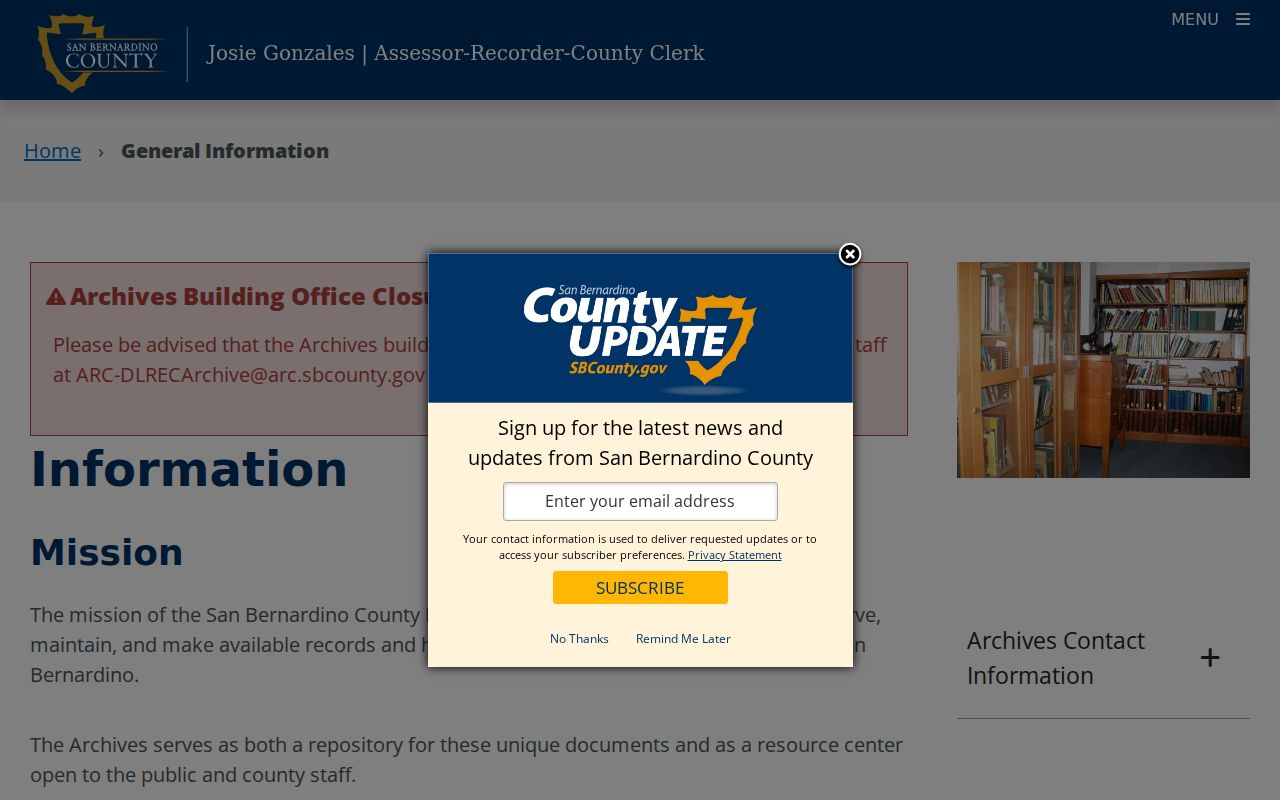
Archive closure changes the route, not the value of the older material. Send a focused request with the APN, legal description, deed parties, target years, and the exact series sought. The California State Archives and the county library are useful fallbacks, but a catalog description is not proof that a digitized image exists.
The Yucca Valley Branch Library is at 57271 29 Palms Highway, with 760-366-1450 and yvref@lib.sbcounty.gov. Workstations provide electronic resources and historic document or photo access, but subscriptions can change. Ancestry Library Edition, HeritageQuest, newspaper databases, and digitized yearbooks should be confirmed locally rather than promised. Morongo Basin Historical Society Museum & Research Center, at 632 Landers Lane, Yucca Valley, California 92284, lists 760-364-2000 and hello@mbhistoricalsociety.org. It advertises extensive research files, artifacts, memorabilia, an original Landers Post Office, and a preserved Jackrabbit Homestead Cabin, but no public surname or item-level finding aid.
Owners and Occupants in Yucca Valley
Previous residents are not the same as previous owners. The Assessor locates and describes taxable property, sets assessed value and exemptions, and posts historical assessment values from 1978 forward. It expressly does not decide legal ownership or permitted land use. A homeowner exemption supports owner occupancy only for the qualifying tax year, and its absence proves little. A tax bill identifies a parcel and payment status, not the people sleeping there.
| Record | Useful inference | What it cannot establish |
|---|---|---|
| Assessor owner field and APN | Named ownership or parcel context when public | Every household member or current occupant |
| Situs and mailing addresses | Whether tax correspondence matches the physical parcel | That an owner lives at the situs; a mailing address may be a PO box, trust, agent, or management address |
| Recorded deed | Transfer parties, dates, vesting, legal description, and return address | Residence, occupancy, or the truth of every assertion in the instrument |
| Telephone, census, or reverse directory | A listed subscriber or enumerated household at a time | Unlisted numbers, other occupants without a listed phone, children, and non-subscribing members |
| Permit or planning record | Project, applicant, owner, agent, contractor, and inspection trail | Who lived in the finished structure |
Use the physical situs as the address anchor, then compare it with the mailing address and any qualifying exemption. A mismatch may suggest an absentee owner, but it can also reflect a preferred mailing address. Owners, family members, caretakers, and other occupants can use the same place at different times. Utility accounts, delivery records, and DMV addresses are not open substitutes for household evidence. The federal Driver’s Privacy Protection Act restricts DMV personal information, while protected-address programs require additional care.
Note: Ownership narrows the search for past residents, but only time-matched household evidence can support an occupancy conclusion.
Yucca Valley’s 1950s Household Trail
The earliest verified page-level directory evidence is a Library of Congress reel titled California: White Pages and Yellow Pages: Banning: December 1950 through January 1959. The 637-image reel is cataloged under Banning and says it includes Beaumont to Yucca Valley. A 1950 page places Yucca Valley subscribers under the Joshua Tree exchange, which explains why a search limited to the modern town name misses relevant material. The reel includes entries such as Phoenix Jack T in Yucca Valley and Sarrail Silvan on Yucca Trail, while one business is printed as Yucca Vally. Preserve those spellings when searching.
The Library of Congress telephone-directory record is the reference point for the reel and its geographic scope.
Telephone evidence is narrow. It can show a subscriber, exchange, street or rural route, and number. It is not a dependable Polk directory, and the 1950 inspection did not prove spouse or occupation fields. Reverse sections invert the order to street, house number, listed subscriber, and telephone. Unlisted numbers, other occupants without a listed telephone, children, and people who did not subscribe remain absent. Record the title page, copyright page, publication year, geographic scope, abbreviation page, exact entry, and image number before drawing a conclusion. Library of Congress Reading Room requests should name the directory type, place, and exact year; the guide notes a 40-directory daily limit and possible two-hour same-day retrieval.
The 1950 census is the newest public population schedule in 2026 under the 72-year release rule; the 1960 census is scheduled for release in 2032. Pair an address or directory entry with the matching census year, then check the enumeration district map when a street index fails. A Yucca Valley-area household may be enumerated under a township or unincorporated geography rather than today’s incorporated-town name. The census can add relationships, ages, birthplaces, occupation, and household structure, while the telephone reel may identify only one subscriber.
The NARA census research route keeps the federal schedule distinct from local directories and land records.
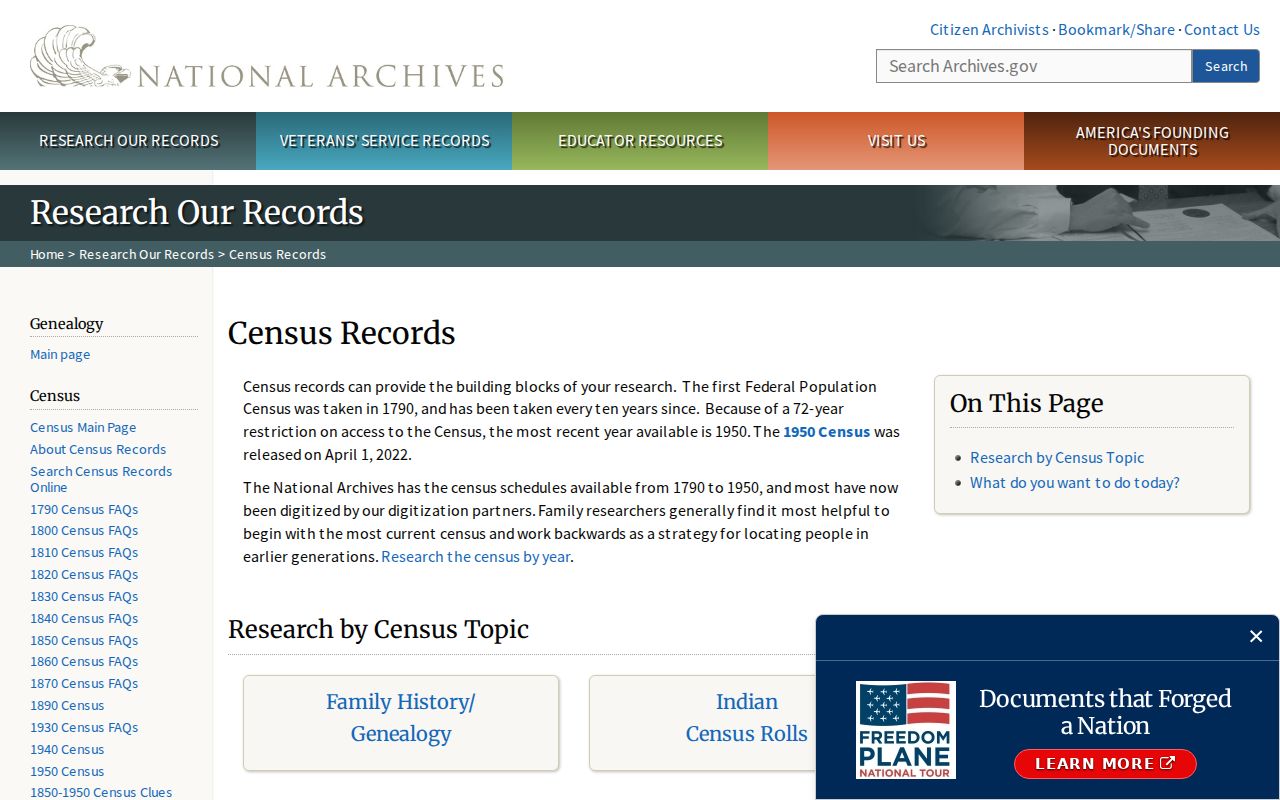
For a clean comparison, use the flow address and APN → deed parties → directory subscriber → census household → newspaper, probate, or obituary. A first appearance, last appearance, address change, or spelling change is evidence to weigh, not automatic proof of arrival or departure.
Yucca Valley House History Through Permits
Permits and planning files add a physical timeline to previous-resident research. Town Community Development handles address assignment and address changes within the Town. Vacant land needs an address before building-plan submittal, and developed property uses the same application for a change. The planning counter can connect an address or APN to an applicant, owner, agent, project, conditions, or inspection history. Town Clerk public-record requests run through Yucca Valley NextRequest, while the published planning application route explains the address process. Request a focused history by address, APN, date range, and record type rather than asking for an undefined household file.
A county or Town permit can identify the person who applied, paid, owned, represented, or built. None of those roles proves that the person lived at the property. The research did not verify a complete public permit portal or an authoritative archive start date. A Laserfiche collection browses Town building permits alphabetically by street, but the result should still be checked against the current custodian and the APN. Residential building plans are retained for a maximum of six months after completion according to the Town Clerk material. Permit and inspection records may survive after plans are gone, and copying surviving plans requires the permissions described in Health and Safety Code §19851.
Water history can explain a quiet period in a house timeline. Warren Basin supported growth, and a 1980 building moratorium tied to overdraft was overturned in 1990 after voters funded a pipeline, just before incorporation. Well, water-district, subdivision, permit, and Town-formation dates can therefore clarify development without turning an infrastructure event into proof about an individual resident.
Note: A permit dates construction or a repair; it does not turn the applicant, contractor, or owner into a confirmed household member.
Lone Star Before the Yucca Valley Directory
Modern labels can hide older residents. Official Town history records early Chemehuevi, Serrano, and Cahuilla presence, followed by the Lone Star and Lone Star Ranch place names. Warren’s Well served stagecoach and stock water from 1878. Veteran homesteads followed the Spanish-American War and World War I, a 1923 gas station brought services, and the 1938 Small Tract Act produced desert parcels of roughly 2 to 5 acres. A post office arrived in 1945. In 1946 developers acquired about 3,000 acres, installed water lines, and subdivided while considering the name Yucca Village.
Search land and legal descriptions for Lone Star, Lone Star Ranch, homestead, tract, federal land, Joshua Tree exchange, and nearby community names before expecting the current Town label. The Town incorporated in 1991 with more than 16,000 residents, but the parcel and household trail began earlier. Recorder index access starts online at 1925, and assessment value data starts online at 1978. The gap between those dates is a reason to use deeds, maps, directories, and census material together.
The place-name shift is a local search quirk, not a missing-person clue. A record can be correctly tied to the land even when its locality line names a ranch, exchange, township, or nearby settlement. Keep the original wording in notes, then add the modern address only as a cross-reference.
Yucca Valley’s Unverified Sanborn Record
No verified Yucca Valley Sanborn sheet or authoritative local house-history guide was located. The gap fits the research history: the community developed through rural parcels, homesteads, postwar subdivision, and later Town growth rather than as a dense nineteenth-century county seat. The absence should not be converted into a claim that no map exists. Search the Library of Congress Sanborn collection by locality, inspect catalog scope, and keep the result marked unverified if no matching sheet appears.
The Morongo Band of Mission Indians Archive preserves Cahuilla, Serrano, and Cupeño cultural material, but its public description does not promise general public person-name research.
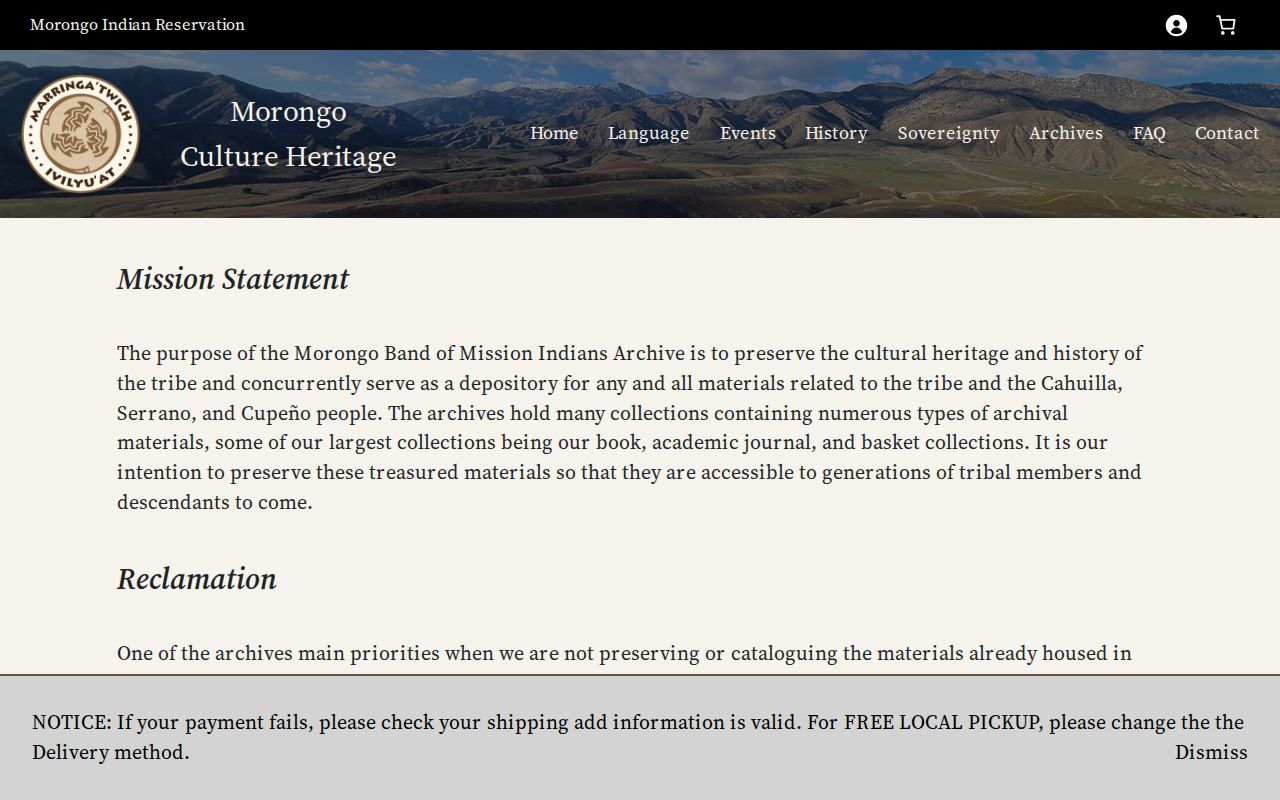
Cultural and regional collections can supply context, photographs, oral-history leads, or homestead material without replacing the parcel record. The Morongo Basin Historical Society remains the most relevant nongovernmental local archive for photographs, oral histories, community files, school records, telephone books, newspapers, and surname files. Exact public finding aids and year runs were not located.
Where a Sanborn footprint is unavailable, use the assessor’s official parcel map, deed legal description, permit and inspection history, newspaper images, photographs, and family papers. Exact permit archive start, directory years, street-renumbering history, and Sanborn sheet years remain research gaps. No verified systematic street renumbering project was found, so older address changes must be tested record by record.
Probate and Obituaries for Yucca Valley Residents
Probate and obituary records often close a household trail because they name relatives, former addresses, burial places, organizations, and estate representatives. ARC Historical Archives lists probate searchable for 1853-1926. Local newspapers and the Hi-Desert Star add later community notices. The Library of Congress catalogs the title from 1957 to the present, preceded briefly by The Desert Star; a publisher archive advertises searchable articles from 2003 forward. Search death notices, clubs, school news, address items, and business notices, then verify a relationship or date against a deed, census, certificate, or court record.
The Central District of California court source is a federal records lead only when the estate or dispute belongs in federal court.
Most local probate and family estate questions require the appropriate California court or county archive, not a federal docket. NARA Riverside, at 23123 Cajalco Road in Perris, 951-956-2000 and riverside.archives@nara.gov, supports Southern California federal land, court, naturalization, military-post, and immigration research. Verify the series before visiting. A cemetery entry, obituary, and probate file can point to the same person, but each source has a different evidentiary role.
Hi-Desert Nature Museum, at 57090 Twentynine Palms Highway, lists 760-369-7212 and museum@yucca-valley.org. Founded in 1964 from community collections and operated by the Town after incorporation, it can provide regional history, photographs, artifacts, and community leads, but no public resident index was located. The Yucca Valley Chamber directory can show a business, contact, manager, or business address, not a household. Historical membership material for Yucca Valley Elks Lodge 2314 requires permission because no public member roll was found.
A Lawful Yucca Valley House History
A sound previous-residents search has a narrow purpose: understand a building, document family history, reconnect with relatives, or study the community. Use the least amount of personal information needed to answer the question. Keep living people out of public compilations, do not reconstruct protected addresses, and distinguish a historical clue from a current identity. A directory entry, voter record, obituary, permit, and deed each carries limits that remain in force when the records are combined.
Lawful use. Yucca Valley house history is appropriate for personal, genealogical, archival, and property-history research. It never authorizes repeated unwanted contact, tracking, intimidation, publication of sensitive information, or harassment of a living person. California privacy, Safe at Home, voter-file, recorder-redaction, and federal driver-record rules still apply.
For a protected or living person, stop at the historical fact that can be verified without exposing a current address. The practical endpoint is a well-cited timeline: parcel and legal description, recorded owner chain, directory or census household, physical change, and obituary or probate confirmation where relevant. Conflicting dates belong in the notes, not in a guessed conclusion.