
How Yucca Valley Residents Directory Searches Begin
A useful resident search begins with a question, not a broad list of names. If the clue is a parcel or street, San Bernardino County Assessor-Recorder-Clerk records provide the strongest first path. If the clue is a person, the Superior Court Court Access Portal, California license search, business filings, and official vital-record channels provide different kinds of confirmation. Older household work depends on the library, census, telephone books, newspapers, and the Morongo Basin Historical Society.
The records do not form one complete roll. An assessor record describes a parcel and may associate an owner, but it does not establish everyone who lives there. A voter tool verifies an individual registration and is not a street browse. A deed names parties to an instrument, while a directory may show only a subscriber. Keep those limits beside every result.
- Write down the known name, address, former name, approximate year, and reason for the search.
- Use ARC Parcel Access for an address or APN, or use CAP and official state registries for a name.
- Join a name to a date and place before treating it as the same person.
- Order or inspect an underlying deed, court filing, or certificate when an index is not enough.
- Use the library, archives, or a focused California Public Records Act request when the record is not online.
San Bernardino Offices for Yucca Valley Records
Yucca Valley is an incorporated town, but it is not a county seat or a separate records county. The County Assessor-Recorder-Clerk is the central source for property information, recorded instruments, and county birth, death, and marriage certificates. The San Bernardino County Registrar of Voters controls election records. Superior Court records are searched through the county court system, with the Joshua Tree District serving the Morongo Basin for nearby courthouse work.
The Town Clerk and Town departments hold a different layer. Council files, contracts, planning applications, permits, code material, address assignments, and other municipal records should start with the Town or its NextRequest portal. A Town applicant or permit holder is not automatically a resident. The office that created a record is the right place to ask for its access rules.
San Bernardino County ARC
Recorder-Clerk and Assessor
222 W. Hospitality Lane
San Bernardino, CA 92415
909-387-8306 Recorder
909-387-8307 Assessor
Registrar of Voters
San Bernardino County Elections
Countywide voter services
Use current county contact page
Town of Yucca Valley
Clerk and Community Development
Municipal requests and planning files
Planning: 760-369-6579 ext. 328 or 310
Yucca Valley Records Across San Bernardino
The county boundary explains why the same search may move between San Bernardino, Hesperia, Joshua Tree, and Yucca Valley. ARC advertises the Hall of Records in San Bernardino, a High Desert Government Center in Hesperia, and a Joshua Tree assessor location for Morongo Basin service. Assessor work is available locally, but Recorder-Clerk service at Joshua Tree follows a limited second and fourth Wednesday cadence. A deed image or certified copy may therefore be faster through Hesperia or San Bernardino.
The county seat is about 75 miles from Yucca Valley, yet the countywide office remains the custodian for recorded documents. The Joshua Tree courthouse is a useful nearby court contact, but CAP should be searched countywide because venue and case type can place a matter elsewhere. That geography is a practical feature of the Yucca Valley residents directory, not a reason to assume that every local record is held at Town Hall.
Note: Check the current ARC locations page before travel because local counter schedules and service limits can change.
| Question | Best first custodian |
|---|---|
| Who is tied to a parcel? | ARC Assessor map and property information |
| Who signed a recorded instrument? | ARC Official Records index and deed copy route |
| What did a Town project involve? | Town Community Development or NextRequest |
| What public case event exists? | San Bernardino Superior Court CAP |
Current Yucca Valley Resident Sources
A current Yucca Valley residents directory is better understood as a set of purpose-built sources. ARC property information can connect an APN, situs address, parcel history, and assessment facts. The recorder index connects names to documents. My Voter Status is an authenticated personal lookup. State business and license systems show an affiliation that may be public without proving a home address.
| Source | Useful clue | Keeper | Access boundary |
|---|---|---|---|
| Parcel Access and map | APN, situs, characteristics, transfer history | ARC Assessor | Free public map; bulk names and home addresses restricted |
| Official Records index | Grantor, grantee, title, date, document number | ARC Recorder | 1925-present index; image at counter or by order |
| My Voter Status | One registrant's status, precinct, districts, ballot status | California Secretary of State | Identity match; not a public street roll |
| CAP case search | Party role, case type, events, disposition | San Bernardino Superior Court | Sealed and protected material excluded |
| Business and license search | Entity, agent, license status, public business contact | California SOS and DCA | Filed or professional address may not be residential |
Use the source that matches the question, then confirm with a second record type. A personal name can be tested against CAP, a license, or a business entity. An address can be tested against APN, deed parties, permits, and a historical directory. The detailed address chain belongs in the Yucca Valley street records search, while the one-person workflow belongs in the resident lookup page.
Parcel Fields in the Yucca Valley Directory
ARC govPIMS is most useful when a search starts with a known address or parcel. The county PIMS material documents parcel, situs, name, map, tract, attached-parcel, and property-ID modes. Current public access can suppress owner or mailing fields under Government Code Section 7928.205, so the visible result must not be treated as a complete name directory.
| Search field | Input | What it can anchor |
|---|---|---|
| Parcel Number | Displayed APN format | Stable county key for map, tax, and deed research |
| Situs Address | House number and street | Physical location and parcel match |
| Owner Name | Active or inactive name mode | Available owner association, subject to privacy limits |
| Assessor, parcel, or tract map | Map or tract reference | Lot, block, subdivision, and legal-description context |
| Property ID | Internal property identifier | Direct property record retrieval |
The public map and the property report may show parcel information, ownership modules, parcel history, roll-value history, characteristics, an official parcel map, and an interactive map. Assessment facts are not a title opinion, sale price, occupancy statement, or land-use decision. Preserve the APN and legal description before moving to the recorder.
See the county's govPIMS parcel search for the current interface. The page also links to a user guide and property-information resources.
For a visual reference, the ARC public parcel page shows the map and property-information entry point used in a Yucca Valley residents directory workflow.
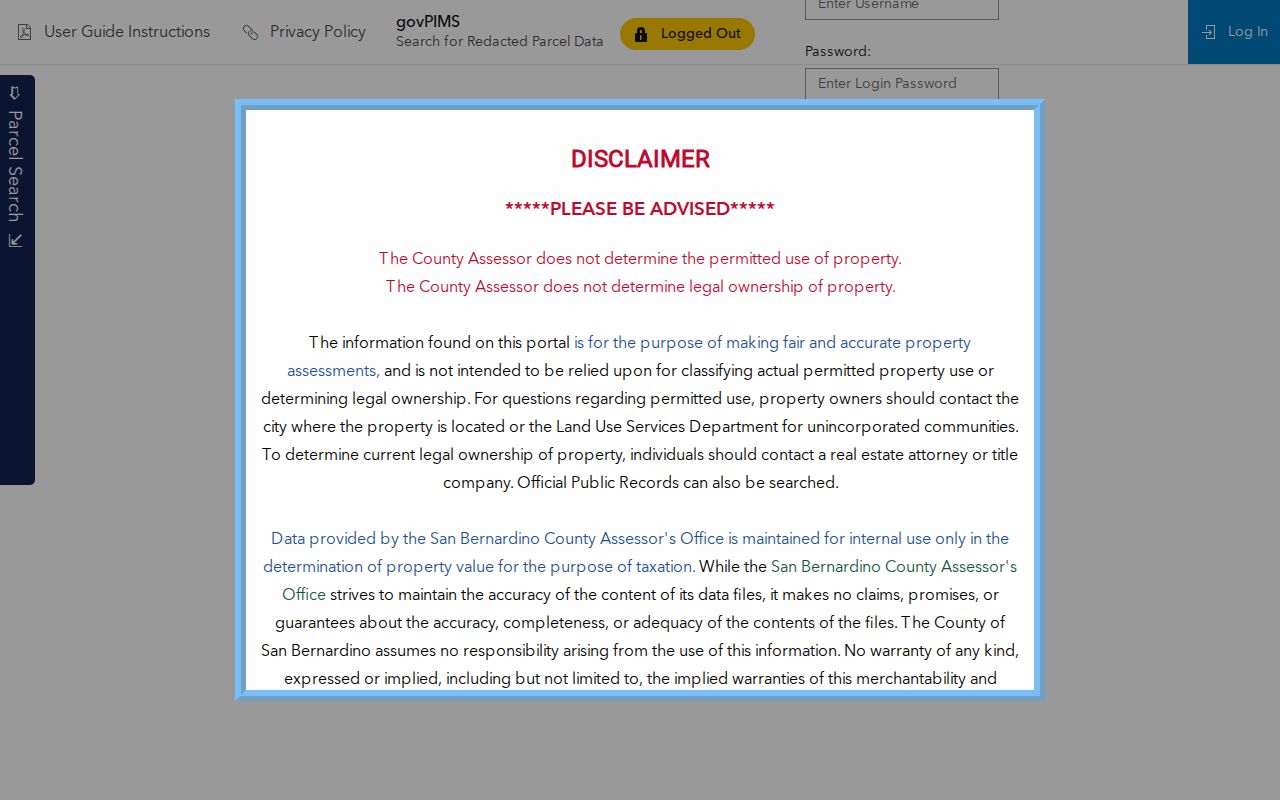
The parcel screen is a starting key. It does not supply a universal list of everyone connected to a street.
Yucca Valley Deed Records: Index First
The ARC Official Records product reaches from 1925 to the present, but its online service is an index rather than ordinary remote document viewing. A result normally shows document number, recording date, title, grantor names, and grantee names. Search spelling variations and repeat both sides of a transfer. The index is like a card catalog: it points to the record and does not prove every statement inside it.
Use the recorder index after an APN or strong party name is known. A deed, deed of trust, reconveyance, lien, judgment, easement, covenant, or map may explain a property trail. Images can be inspected at the Hall of Records or High Desert Government Center, or ordered through the county. The published route lists a first copy page charge of $4, later pages at $1.50, a seal charge of $1.50 per page, and a 3.5 percent online card surcharge. The live page also posts new mail charges, so confirm the amount before sending payment.
The ARC recorder search entry is the right doorway for a grantor and grantee search. When the online index stops at 1925, ask ARC Historical Archives or the FamilySearch county catalog about earlier series.
The ARC official-records page explains the county index, copy routes, and image-access boundary.
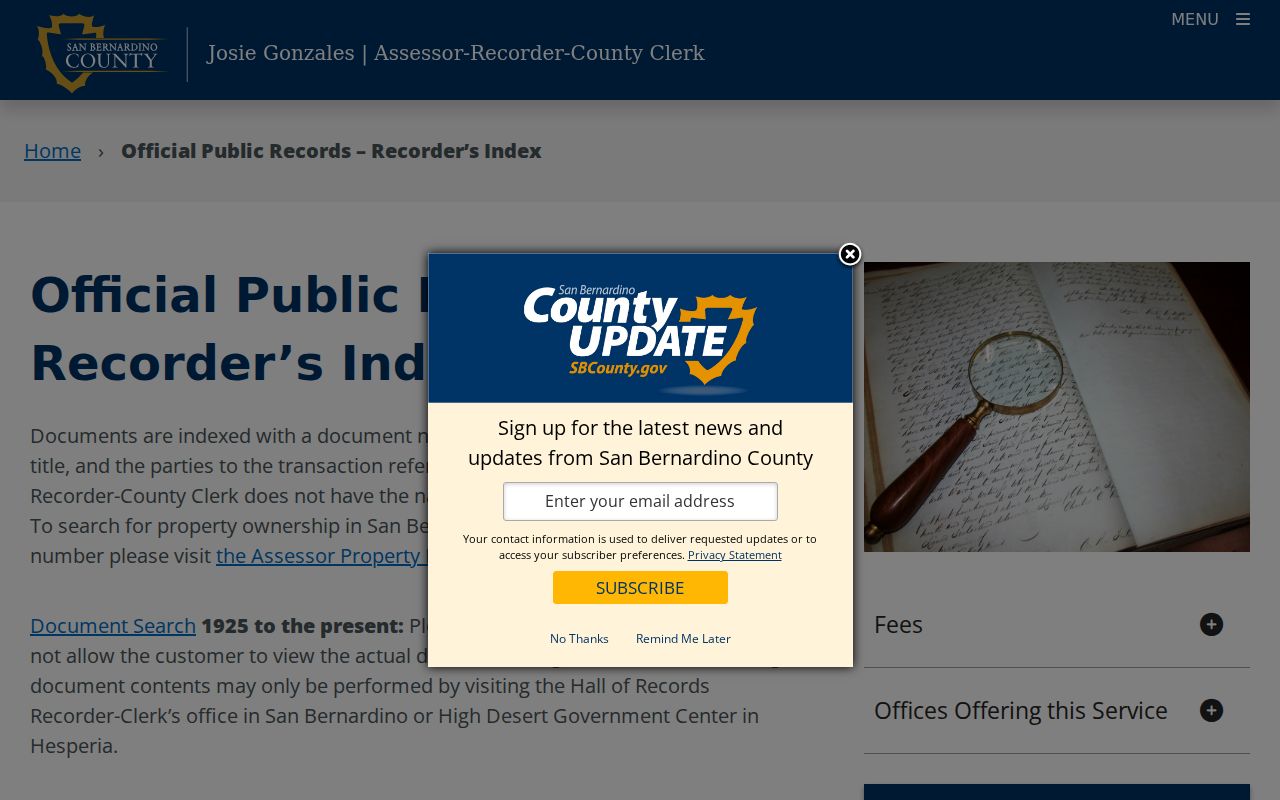
The official-records view reinforces why a parcel-to-party workflow is stronger than a guessed street-name search.
What a Yucca Valley Court Lookup Confirms
San Bernardino Superior Court's Court Access Portal, or CAP, is the county route for civil, criminal, family, probate, and traffic case information. Joshua Tree is the nearby Morongo Basin district, but a Yucca Valley resident lookup should search the county because the filing district can differ. There is no single statewide California trial-court party index that replaces a county search.
CAP can return a case number, title, filing date, case category, status, courthouse, indexed party roles, register-of-actions events, hearing dates, disposition, and document titles. Some eligible civil images can be purchased remotely at $0.50 per page. Cases before 1998 have limited electronic data, and sealed, juvenile, adoption, confidential family, and protected material may not appear.
| CAP clue | Use in a Yucca Valley residents directory check |
|---|---|
| Case number and filing date | Separate two people with similar names |
| Party role and case type | Distinguish petitioner, respondent, plaintiff, decedent, or another role |
| District and courthouse | Explain where an older or local file may be held |
| Register event and disposition | Show procedural history without guessing the outcome |
When a file is not online, contact the filing district clerk or Document Control. Older files can be off-site and may take up to a week to retrieve. The court's administrative-record request procedure is not a substitute for a case-file request.
The San Bernardino Court Access Portal is the source interface for the case search shown below.
CAP provides a case lead. A second independent anchor, such as a date, role, or public address in a filing, is needed before names are merged.
Yucca Valley Resident Voter Status
California Secretary of State My Voter Status is an individualized verification service. Its form can ask for first name, last name, date of birth, and conditional identity details such as a California driver license or the last four digits of a Social Security number. A matched user may see registration status, party preference, precinct, districts, polling place, vote-by-mail status, and related voter information.
That workflow cannot be browsed by street to list Yucca Valley neighbors. Elections Code Sections 2180 through 2194 control voter-file access and use. Driver-license numbers, Social Security numbers, signatures, and confidential identifiers are not open directory fields. Approved voter-file requests go through the San Bernardino County Registrar of Voters and require a declared purpose and permitted use.
The My Voter Status lookup is useful for checking a person's own registration. It is not evidence of how anyone voted, and inactive status does not by itself prove that a person moved.
The San Bernardino County election services page is the county contact route for approved voter-file questions.
The identity gate is the important fact: voter data can support an authorized election purpose, but it is not a public resident roster.
Yucca Valley Vital Records and Copies
For a Yucca Valley birth, death, or public marriage, the county Recorder-Clerk and California Department of Public Health Vital Records provide different routes. California does not use one blanket closure period for every certificate. An informational certified copy may be available to the public, while an authorized certified copy is limited to the people and officials listed in Health and Safety Code Section 103526. Confidential marriage certificates follow Family Code Section 511 and are more restricted.
CDPH's 2026 fees in the research are $31 for a birth certificate, $26 for a death certificate, $19 for a public marriage certificate, and $18 for a dissolution certificate. Use the current county or CDPH form and check processing information at the time of order. A mailed authorized-copy application normally needs a sworn statement and, unless an exception applies, notarization.
Vital records establish an event and family connection more directly than a directory, but they do not necessarily establish a current address. For older events, combine county records with State Archives, FamilySearch, newspapers, church registers, cemetery work, or a library database. A divorce certificate of record covers a limited era and is not the same as the court decree.
Finding Yucca Valley Residents Through Heir Records
A lawful personal search often has a human purpose. Probate can identify a decedent, petitioner, heirs, or devisees in public filings. A yearbook, newspaper notice, or alumni file can reconnect former classmates. The California Secretary of State bizfile search and county fictitious-business-name filings can connect a person to an entity. California Department of Consumer Affairs search can confirm a license status, dates, and public professional contact.
Each record carries a different risk of over-reading. A probate name is tied to a court matter, not every family relationship. A business agent may be a service address. A license address may be a public work address. An unclaimed-property hit can show an old reported city or address, but a claim requires proof. County jail, CDCR, and Megan's Law tools answer custody or statutory registry questions and should not be described as a complete resident directory.
| Goal | Source path | Best cross-check |
|---|---|---|
| Locate an heir trail | CAP probate case, obituary, public petition | Underlying filing and dates |
| Reconnect with a classmate | Library yearbook, newspaper, historical society | Official business or license record |
| Verify a business owner | bizfile, county FBN, Town certificate request | Filed entity history and location |
| Check a professional record | DCA or specialty board | License number and status |
Requesting Yucca Valley Records Not Online
When an index or portal is missing, make the request narrow enough for the custodian to find the record. The Town of Yucca Valley uses NextRequest for California Public Records Act requests. State the department, street address or APN, date range, permit or case number, record type, and preferred format. A request does not need a statement of purpose. Published requests may become public, so do not place sensitive personal details in the description.
Planning records include site-plan review, conditional-use, land-use compliance, variance, maps, signs, temporary uses, home occupations, and address assignment or change material. The planning page lists appointment windows for major and minor applications and says mailed applications are returned. If an online permit search is absent, ask for permits, applications, inspection cards, certificates of occupancy, disclosable plans, code cases, and address records. Residential plans may be retained for no more than six months after completion, while permit and inspection records can still matter.
- Identify the office that created the record, such as Town planning, ARC, the court, or the library.
- Give a date range and address or APN instead of asking for a general resident list.
- Ask for an existing electronic register or file, including redacted portions where allowed.
- Request the custodian's reason and authority for any withholding or fee.
The Town request portal is the online fallback for municipal material. County and court records use their own access paths rather than the CPRA when court rules control.
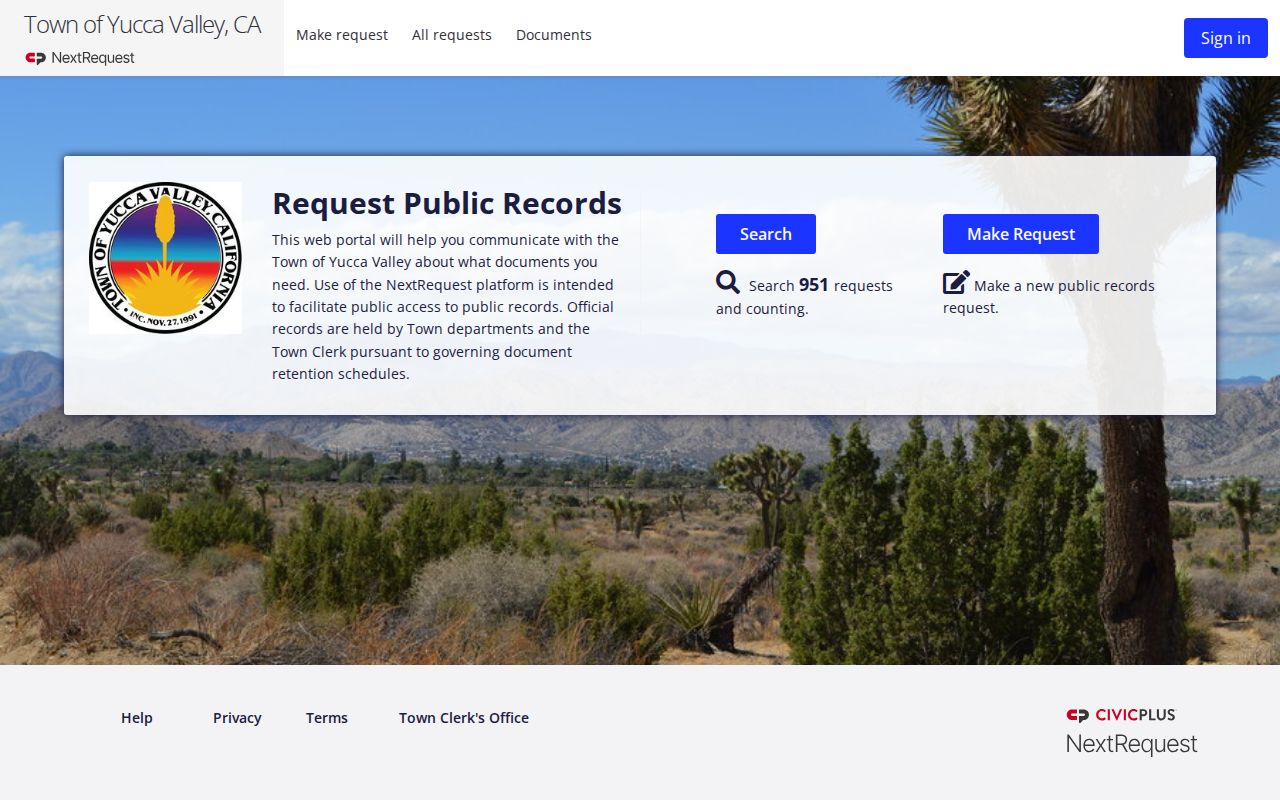
A focused request creates a traceable record request without asking the Town to invent a new directory.
Older Yucca Valley Resident Directory Names
Yucca Valley's history is newer and more spread out than a county-seat directory tradition. The Yucca Valley Branch Library at 57271 29 Palms Highway can be asked about telephone books, county directories, yearbooks, local newspapers, obituaries, clipping files, photographs, and licensed genealogy resources. Published branch hours are Monday through Wednesday 11 to 7, Thursday 10 to 6, Friday closed, Saturday 9 to 5, and Sunday closed. Call 760-366-1450 or email yvref@lib.sbcounty.gov to confirm current access.
The Arda Haenszel California Room lists San Bernardino city directories from 1887 through 1968 and county genealogical quarterlies from 1962 to the present. Those volumes primarily describe the county seat and valley, so geographic coverage must be checked before treating an entry as a Yucca Valley household. The California State Archives and ARC Historical Archives add older county and state series, but ARC's archive building is currently closed and uses email or phone contact.
The Yucca Valley Branch listing shows the local reference starting point.
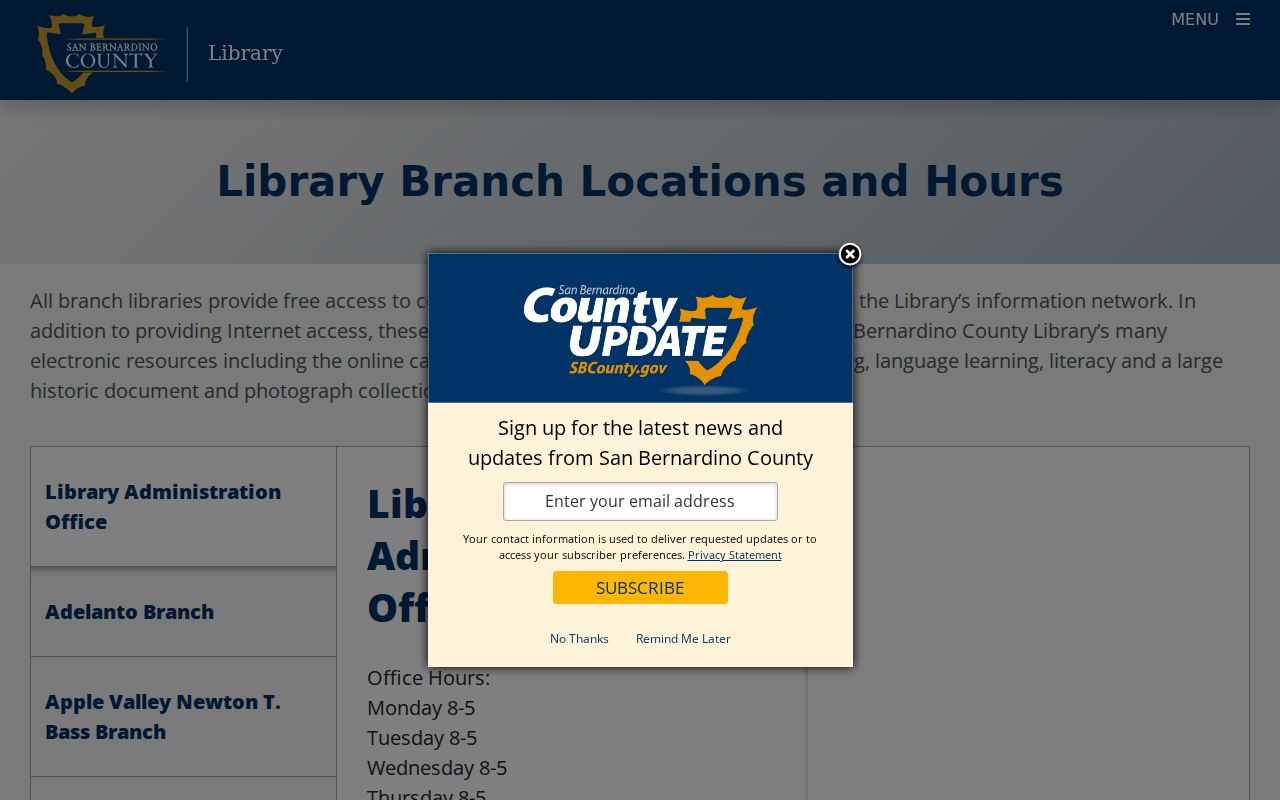
Library staff can confirm the shelf detail that is not posted in the public catalog.
The California State Archives catalog is another route for county and state series. Ask for a record set by creator, county, place name, and year.
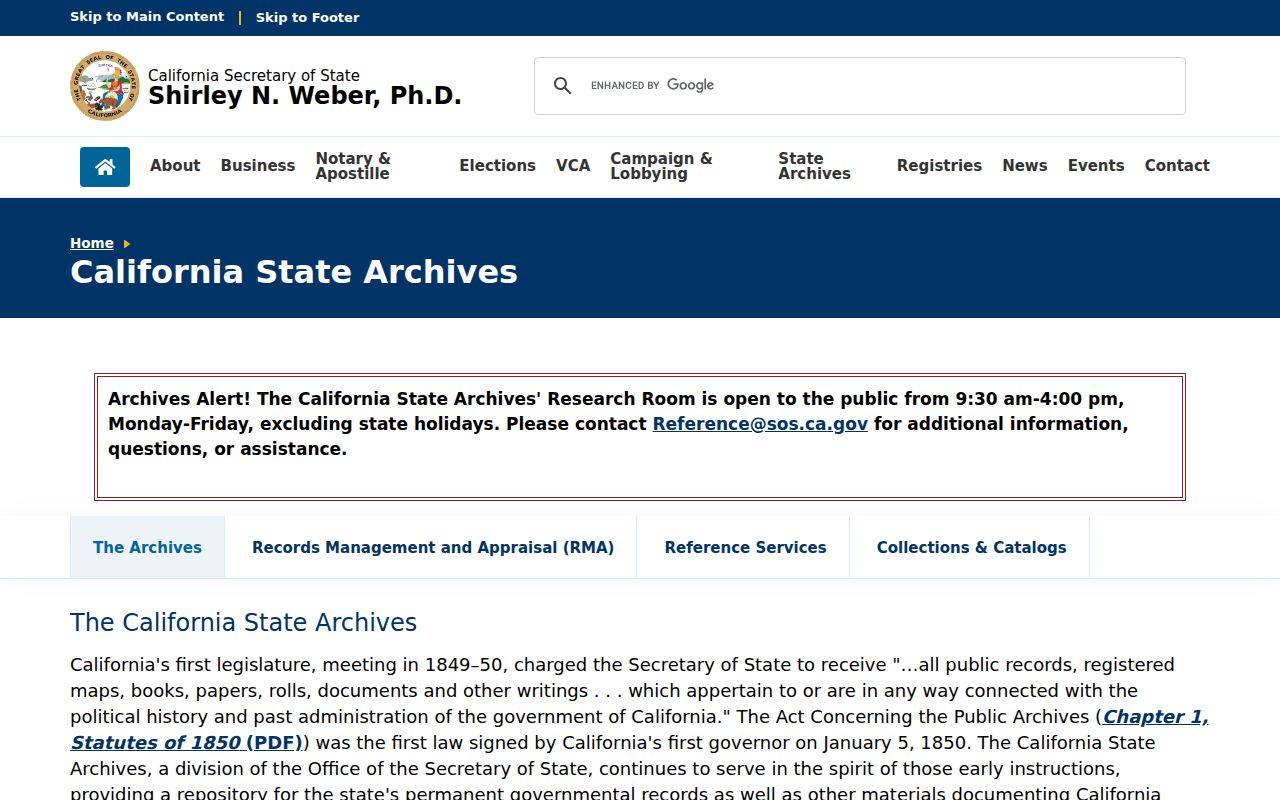
Regional headings such as Lone Star, Joshua Tree, Morongo Basin, and exchange names can matter more than the modern town label.
How Yucca Valley's Record Timeline Took Shape
San Bernardino County formed in 1853, while the modern town name arrived much later. Official local history places Warren's Well on the stage and stock route from 1878, veteran homesteads after the Spanish-American War and World War I, a 1923 gas station, the 1938 Small Tract Act, a 1945 post office, and a 1946 development that installed water lines and subdivided roughly 3,000 acres. A search for an early household may therefore need Lone Star, ranch, tract, federal-land, and nearby-community headings.
Water infrastructure also explains gaps in property and permit trails. A 1980 building moratorium tied to basin overdraft was overturned in 1990 after voters funded a pipeline, just before Town incorporation in 1991. The recorder's online index begins at 1925, assessment valuation data is online from 1978, and CAP's modern portal launched in 2022. Those cutoffs describe access history, not the age of every underlying record.
| Period or event | Search value |
|---|---|
| 1878 Warren's Well | Early place and route reference |
| 1938 Small Tract Act | Desert parcel and homestead context |
| 1945 post office and 1946 subdivision | Postal and development headings |
| 1991 incorporation | Beginning of a stronger Town administrative trail |
Yucca Valley Directory Address Privacy
Some people are absent from public address results for a lawful reason. California's Safe at Home program provides a substitute mailing address, mail forwarding, a service-of-process agent, and confidential voter registration for eligible participants, including victims of stalking, domestic violence, sexual assault, child abduction, elder or dependent-adult abuse, trafficking, and other qualifying groups. The program does not erase an address that was already made public.
California privacy rights under the CCPA and CPRA apply to covered businesses, not as a way to delete a deed, court docket, certificate, or accurate government archive. The state's DROP system gives a resident one authenticated deletion request for registered data brokers. It does not suppress news, another person's record, or a legally retained government file. A custodian correction process is the right path for an inaccurate official record.
The Safe at Home program explains eligibility and substitute-address protection. A legal description can still identify land, so address protection does not make every property connection disappear.
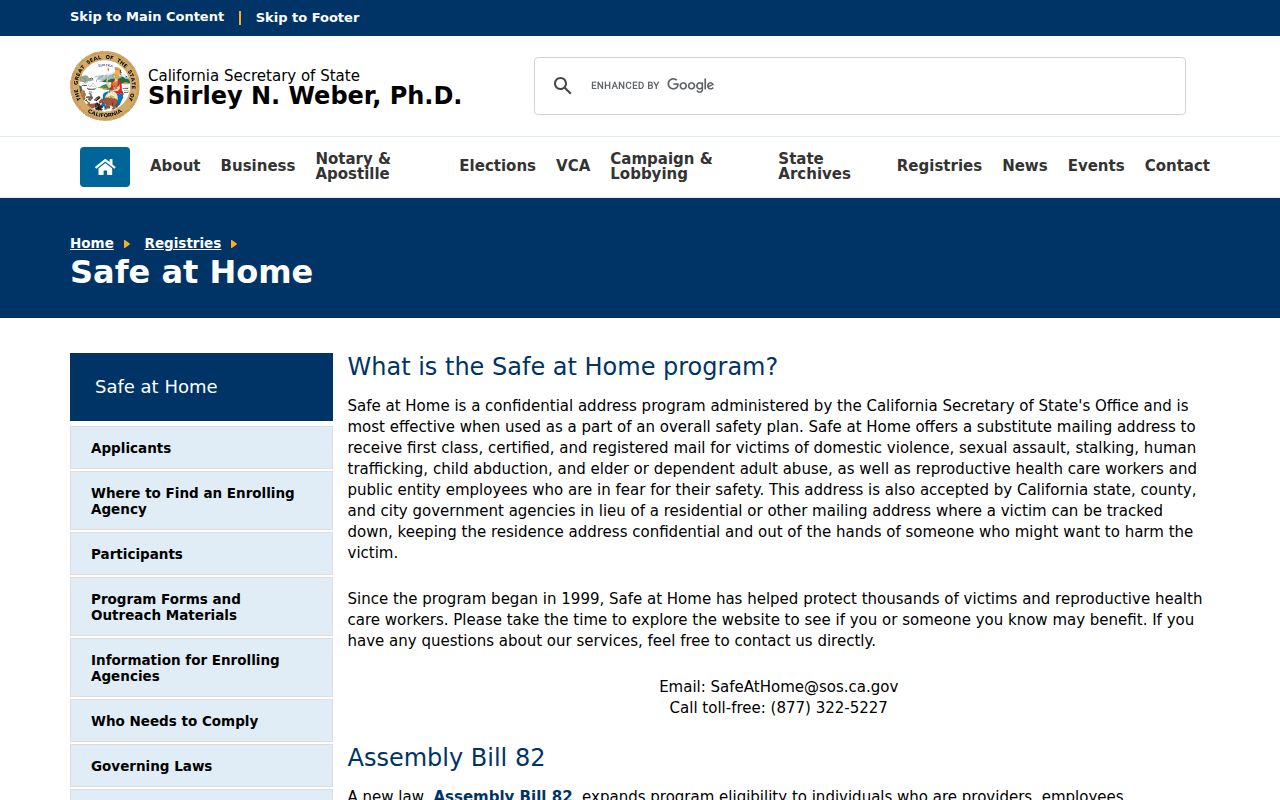
Privacy protection belongs in the search plan before a sensitive address is copied into a request, note, or public file.
Where a Yucca Valley Residents Directory Stops
A careful search ends when the record cannot answer the next question. Assessor data can describe a parcel but not every person present. The recorder can show a party to an instrument but not a full household. CAP can show a case history but not sealed or juvenile content. A library directory may omit an unlisted number, a non-subscribing household member, or an address that was indexed under a different exchange.
Use the evidence ledger to record the source, exact spelling, role, date, place, record number, and access limit. Two independent anchors are a practical minimum for a same-name match. When a result is wrong, contact the custodian that created it. When a result is simply absent, change the record set or time period rather than assuming the person or household did not exist.
For federal matters, PACER covers the Central District of California and federal bankruptcy courts. For local history, the library, Morongo Basin Historical Society, Hi-Desert Star archive, State Archives, and census collections fill different gaps. A Yucca Valley residents directory is strongest when those sources remain distinct and the final conclusion stays within the evidence.
The PACER service is the federal search route when a matter is outside San Bernardino Superior Court.
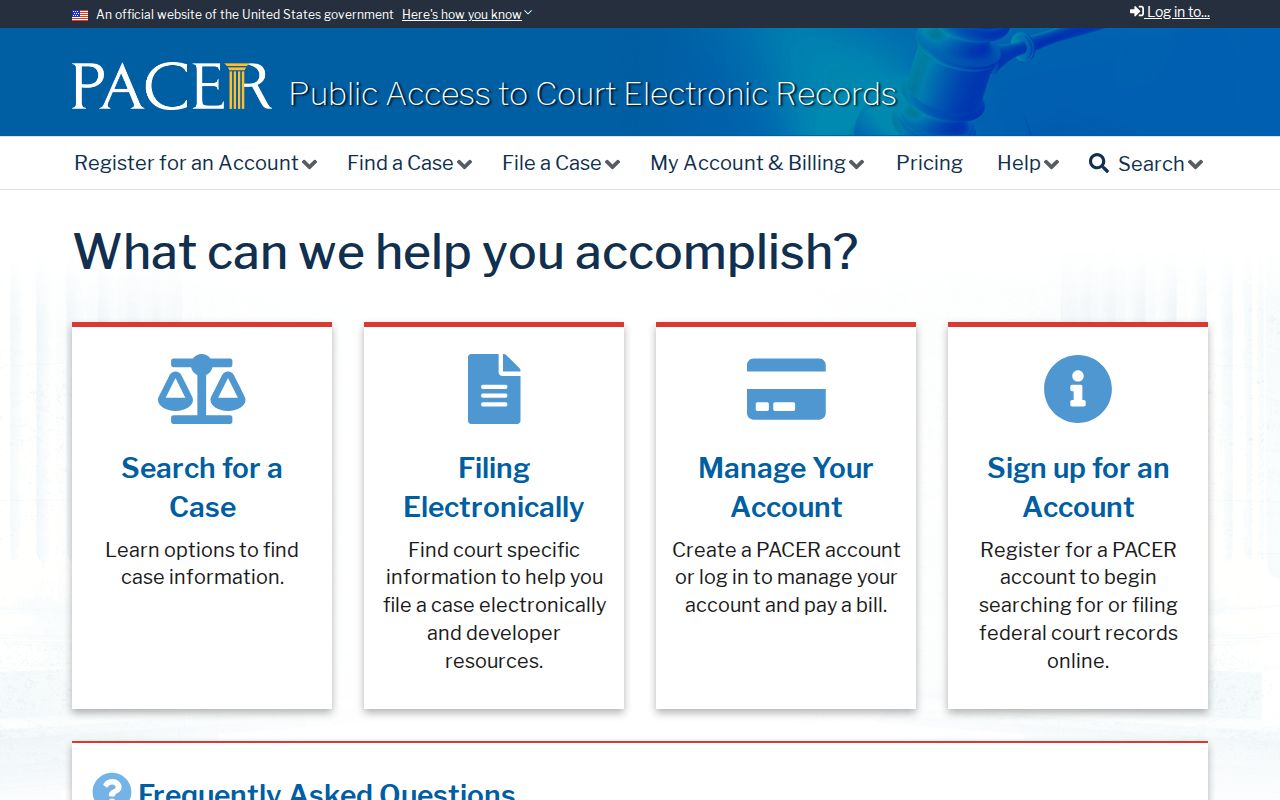
Federal court access is a separate channel, so a local name search should not be presented as a complete nationwide result.